Endotoxin Testing for Peptides Used in Cell Culture
Bacterial endotoxin can trigger strong responses in immune and primary cells at picogram levels. How LAL and recombinant Factor C assays work and how to keep cultures clean.
Endotoxin, the lipopolysaccharide (LPS) from the outer membrane of Gram-negative bacteria, is one of the most common hidden variables in cell-based peptide research. It survives autoclaving, passes through standard 0.22 µm filters and can activate immune cells at very low concentrations. If a peptide appears to switch on an inflammatory pathway, endotoxin is the first thing to rule out.
Why peptide work is exposed
Peptides are made with large volumes of water, buffers and glassware, and are often handled outside a sterile environment before lyophilisation. Lyophilisation does not destroy LPS. Any contamination introduced along the way ends up in the vial.
Which assays are sensitive
- Macrophages, monocytes and dendritic cells: respond to LPS through TLR4, often at picogram-per-millilitre levels.
- Primary endothelial and epithelial cells: can show cytokine release and barrier changes.
- Most immortalised lines are less sensitive, but readouts such as NF-κB reporters can still respond.
This is especially relevant to immunology peptides such as KPV and thymosin α1; see immunology peptides: KPV and thymosin alpha-1.
How endotoxin is measured
| Method | Principle | Notes |
|---|---|---|
| LAL gel-clot | Horseshoe-crab amebocyte lysate clots in the presence of endotoxin | Simple pass/fail at a set sensitivity |
| LAL kinetic turbidimetric | Rate of turbidity development | Quantitative |
| LAL chromogenic | Colour release from a synthetic substrate | Quantitative, plate-reader based |
| Recombinant Factor C (rFC) | Recombinant enzyme with a fluorogenic substrate | Animal-free, quantitative |
Results are reported in endotoxin units (EU) per mg of peptide or per mL of solution.
Keeping endotoxin out of your experiment
- Check the certificate. If endotoxin was tested, the COA states the method and limit.
- Use endotoxin-free consumables. Certified pipette tips, tubes and water.
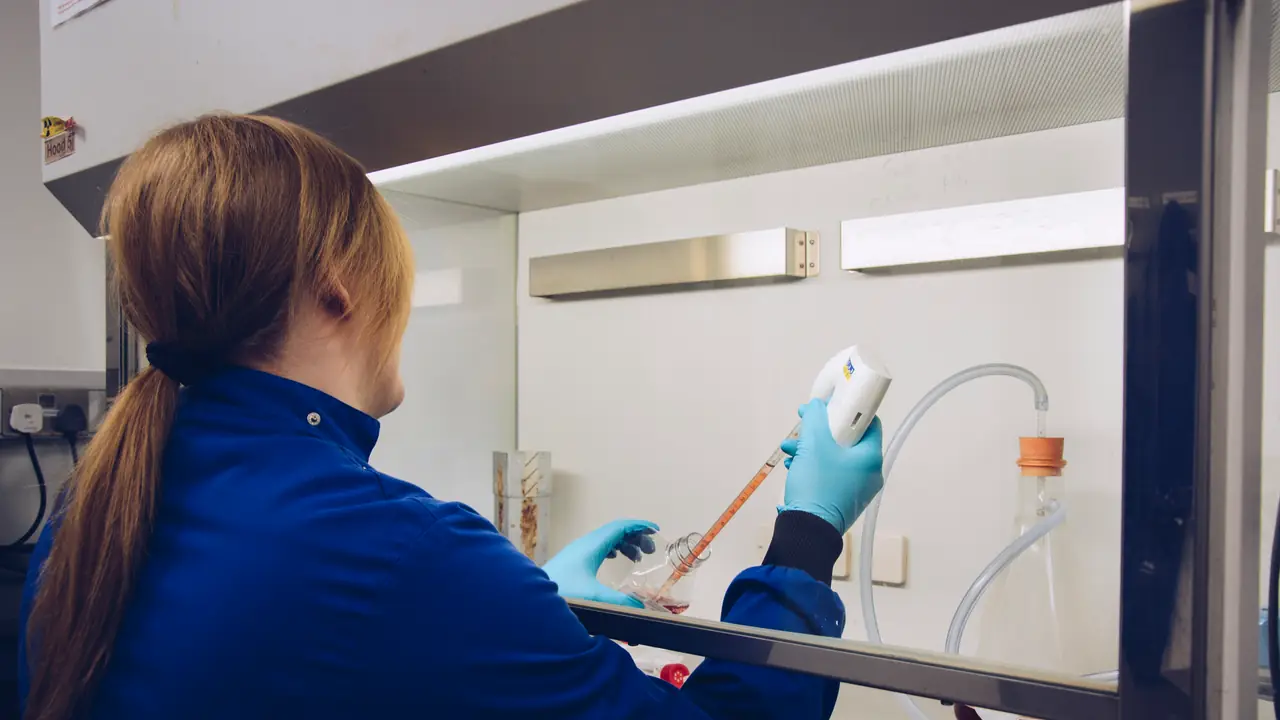
- Reconstitute in a biosafety cabinet with aseptic technique.
- Include controls. An LPS-only positive control shows how your cells respond; a heat-inactivated or polymyxin B control can help distinguish peptide effects from LPS effects (polymyxin B binds LPS).
- Test your own stock when results are surprising. Benchtop LAL kits are inexpensive compared to a lost experiment.
A note on preservatives
Bacteriostatic water contains benzyl alcohol, which prevents microbial growth in a multi-use vial but does not remove endotoxin, and can itself affect some cell types. See choosing a reconstitution solvent.
For in-vitro laboratory research only. Not for human or veterinary use. This article summarises laboratory practice and published research. Nothing here is advice about use in people or animals.