How to Verify a COA in Australia: An 8-Step Peptide Checklist
Eight checks Australian labs can run on any research peptide COA: lot match, lab identity, NATA and ISO 17025, lab verification portals, dates, methods and red flags.
A certificate of analysis (COA) is a claim made by a laboratory about one lot of material. Reading a COA tells you what the claim says. Verifying it tells you whether the claim is genuine, current and about the vial on your bench. The two are easy to confuse, and most problems with research peptide COAs in Australia sit in the gap between them.
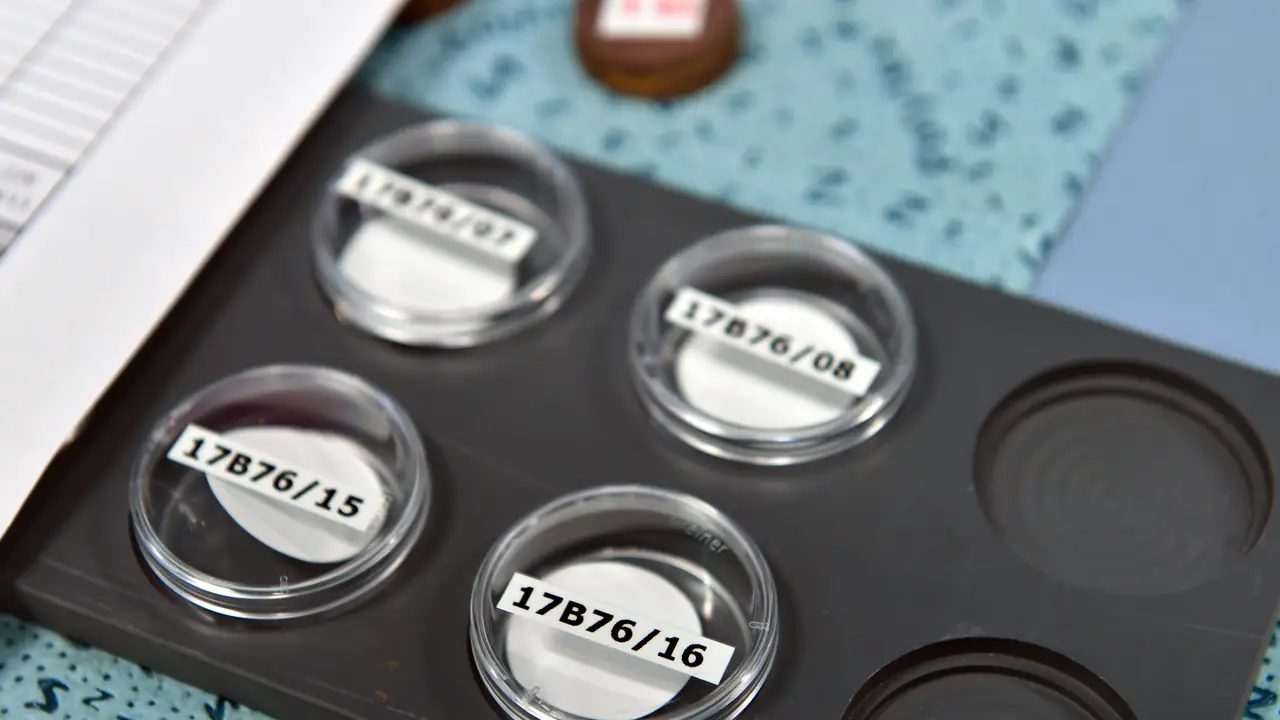
Key point: a COA is only evidence when three things line up: the lot code on the certificate matches the lot code on your vial, the laboratory that issued it is real and identifiable, and the laboratory’s own records confirm the report.
This checklist assumes you already know the sections of a report. If not, start with how to read a peptide COA, then come back.
The 8-step COA verification checklist
| # | Check | What a pass looks like | Red flag |
|---|---|---|---|
| 1 | Lot match | Lot code on the COA is identical to the vial label | No lot code, or a different one |
| 2 | Compound and size | Name, sequence or CAS and nominal mass agree with the label | Generic “peptide sample” wording |
| 3 | Laboratory identity | Named lab with an address and contact details | Logo only, or no lab named |
| 4 | Accreditation | Accreditation number you can look up, with a relevant scope | “Certified” with nothing to check |
| 5 | Lab-side confirmation | Report found on the lab’s portal or confirmed by the lab | Lab has no record of the report |
| 6 | Dates | Test date plausible for the lot now being sold | Same report reused for years |
| 7 | Method and raw data | Chromatogram, MS spectrum and method details attached | A single purity number, no traces |
| 8 | Internal consistency | Peak table, purity and mass agree with each other | Values that do not add up |
The sections below explain each check.
1. Match the lot code, character for character
Every meaningful COA names a lot (or batch) number. Compare it with the label on your vial, character by character, including suffixes such as size codes. A certificate for a different lot, a different size or a different supplier tells you nothing about your material, however good the number on it is.
This is the single most common failure. A supplier may hold one strong report and show it against every lot it sells. Our article on lot numbers and batch traceability explains why lots differ, even from the same synthesis route.
2. Check the compound, sequence and nominal mass
The report should identify the compound precisely: name, and ideally the sequence, CAS number or molecular formula, plus the nominal mass of the sample (for example 10 mg). Cross-check the theoretical molecular weight on the COA against a reference value. For a research peptide this is a fixed property of the sequence, so it should not vary between reports. A theoretical mass that differs from the reference value means the lab was told the wrong structure or the report has been edited.
3. Confirm the laboratory exists and is identifiable
A verifiable report names a laboratory with a physical address, a website and contact details. Search for the lab independently rather than following links printed on the PDF. Then ask:
- Is the lab independent of the seller? A supplier’s own batch report is useful, but it is not third-party testing. Independent reports should name the testing lab, not just the seller.
- Does the lab actually offer peptide analysis? A food or water laboratory reporting HPLC purity on a 39-residue peptide deserves a second look.
- Does the business selling the material identify itself? An Australian supplier should show its legal entity and ABN, which you can check on the Australian Business Register (ABN Lookup).
4. Look up accreditation: NATA and ISO/IEC 17025
In Australia, testing laboratories are accredited by NATA (the National Association of Testing Authorities), usually to ISO/IEC 17025, the international standard for testing and calibration laboratories. NATA publishes a searchable directory of accredited facilities, and each accreditation has a defined scope: the specific tests the lab is accredited to perform.
Two practical points:
- Accreditation is to a scope, not to a lab in general. A lab can be NATA-accredited for one method and not another, so check that the scope covers the test on your report.
- Overseas laboratories are accredited by their own national bodies. Many are signatories to the same international mutual-recognition arrangements as NATA, so the same question applies: is there an accreditation number, and does its scope cover this test?
Many reliable analytical labs that serve the research peptide market are not accredited for peptide purity at all. That does not make their reports false, but it does make lab-side confirmation (step 5) more important.
5. Confirm the report with the laboratory itself
This is the step that turns reading into verifying. Ask the laboratory, not the seller.
- Verification portals and codes. Some labs publish every report on a public page or give each report a unique key. Janoshik, for example, publishes reports on public test pages that anyone can open from the lab’s own site. If the report on the lab’s page differs from the PDF you were sent in any value, trust the lab’s page.
- Email the lab. Where there is no portal, send the report number, date and lot code to the lab’s published contact address and ask it to confirm that it issued the report and that the values are unchanged.
- No record means no evidence. If the lab cannot find the report, treat the COA as unverified, however professional it looks.
6. Check the dates make sense
Look at the analysis date and compare it with what you know about the lot:
- The test should post-date synthesis and pre-date sale. A lot that is still being sold two years after its only report may have been re-labelled or re-sourced.
- One report dated years earlier, shown against every new batch, is a classic sign of a recycled COA.
- For lyophilised material, a report from the time of manufacture says nothing about storage since. Our guide to storing lyophilised peptides covers what changes over time.
7. Read the method and the raw data, not just the number
A purity figure on its own cannot be checked. A verifiable COA includes:
- The HPLC chromatogram, with the column, mobile phases, gradient, detection wavelength (typically 214–220 nm for peptides) and a peak table showing retention time and area for each peak.
- The mass spectrum, with the observed mass and the theoretical mass, so identity can be confirmed independently of purity.
- The test type: purity, identity, endotoxin, water or net peptide content are different measurements. A 99% HPLC purity does not mean a vial contains 99% peptide by weight; see net peptide content vs purity.
For what each of these methods can and cannot show, read our guide to HPLC and mass spectrometry testing methods.
8. Look for internal inconsistencies and edits
Genuine instrument output is internally consistent. Edited or recycled reports often are not. Check that:
- The purity equals the main peak’s area divided by the total area in the peak table.
- The retention time of the main peak is the same in the chromatogram and the table.
- The chromatogram is not identical to one on a report for a different compound or lot. Identical noise patterns across “different” samples are a strong sign of a copied trace.
- Fonts, alignment and spacing are uniform, and the PDF’s document properties (creation date and software) are plausible for the stated analysis date.
- The observed mass sits within the stated instrument tolerance of the theoretical mass.
None of these checks proves a report is genuine on its own. Together, with lab-side confirmation, they make a fake very hard to pass.
What a verified COA still does not tell you
Even a fully verified report has limits. It describes one lot on one day. It does not cover handling after dispatch, the condition of a vial that sat in a hot depot, or the identity of material that was relabelled after testing. For Australian summers in particular, read how hot is too hot for a lyophilised vial and record arrival condition alongside the COA.
How Vial AU publishes certificates
We publish certificates so that each of the checks above can be run without asking us for anything:
- Lot-matched only. A size on a product page shows a purity figure only when a certificate exists for the exact lot in stock. Otherwise it reads “Batch COA pending”. A result is never borrowed from another lot, size or supplier.
- Labelled by source. Independent third-party reports name the laboratory. Supplier batch reports are labelled “Supplier lab” so the two cannot be confused.
- Lab links where they exist. When a testing lab offers a public report page, the certificate page links straight to it, so you can check our copy against the lab’s.
- Published in full. Every report is open in the certificate library, with lot, lab, method, result and test date.
Frequently asked questions
What is the difference between reading and verifying a COA?
Reading a COA means understanding what it reports: identity, purity, content and the method used. Verifying it means confirming that the report is genuine, issued by a real laboratory, unaltered, and about the same lot as your vial.
Do Australian peptide COAs need to come from a NATA-accredited lab?
No rule requires a research peptide COA to come from a NATA-accredited laboratory. Accreditation is a useful signal, but only when its scope covers the test reported. Lab-side confirmation of the specific report matters more than a logo.
Is a third-party COA always better than a supplier COA?
An independent report removes the seller’s conflict of interest, which is why it carries more weight. A detailed supplier batch report with full chromatograms and mass spectra can still be informative. The best evidence is both, clearly labelled. See independent vs in-house COAs.
What should I do if a COA cannot be verified?
Treat the material as uncharacterised until it is tested independently, and keep the vial, label and documentation. Misleading claims about products sold in Australia can be raised with the seller and, if needed, reported to the ACCC.
For in-vitro laboratory research only. Not for human or veterinary use. This guide describes analytical document checks and is not legal advice.
For in-vitro laboratory research only. Not for human or veterinary use. This article summarises laboratory practice and published research. Nothing here is advice about use in people or animals.