MOTS-c and SS-31: Peptide Tools for Mitochondrial Research
A mitochondrial-derived signalling peptide and a cardiolipin-targeting tetrapeptide: what each is, how they are studied in respiration and membrane-potential assays, and how to combine them with NAD+.
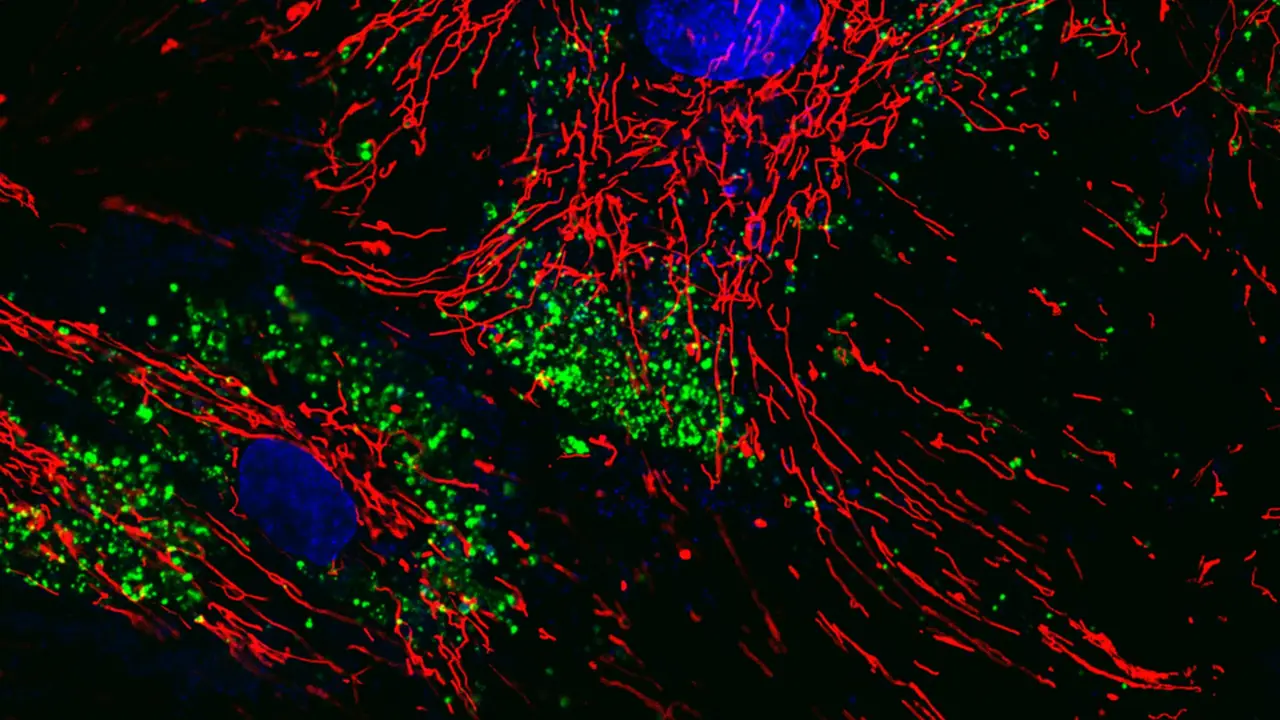
Mitochondria are both the cell’s main energy source and a signalling hub. Two research peptides approach them from opposite directions: MOTS-c, a peptide the mitochondrial genome itself encodes, and SS-31, a synthetic peptide that targets the inner mitochondrial membrane.
MOTS-c
MOTS-c is a 16-amino-acid peptide encoded by a short open reading frame within the mitochondrial 12S rRNA gene. Its description in 2015 added to a small family of “mitochondrial-derived peptides” and suggested that mitochondria can signal to the rest of the cell through peptides they encode.
Published in-vitro and animal work has focused on:
- AMPK activation and downstream metabolic signalling
- The folate–methionine pathway and AICAR accumulation as a proposed mechanism
- Translocation to the nucleus under metabolic stress, with effects on gene expression
SS-31
SS-31 (also known by the name elamipretide) is a cell-permeable tetrapeptide, D-Arg-Dmt-Lys-Phe-NH₂, where Dmt is 2′,6′-dimethyltyrosine. Its alternating aromatic and basic residues let it cross membranes and concentrate in the inner mitochondrial membrane, where it associates with cardiolipin, a phospholipid essential for the organisation of electron-transport-chain complexes.
Research use centres on cristae structure, electron-transport efficiency and mitochondrial reactive oxygen species.
Assays that pair well
| Assay | What it measures | Notes |
|---|---|---|
| Extracellular flux (oxygen consumption) | Basal and maximal respiration, ATP-linked respiration | Use the mitochondrial stress-test sequence |
| TMRM or JC-1 imaging | Mitochondrial membrane potential | Protect from light; include an uncoupler control |
| MitoSOX | Mitochondrial superoxide | Short incubation, read promptly |
| NAD⁺/NADH ratio | Redox state | Prepare NAD⁺ fresh; it is labile in solution |
| AMPK phosphorylation | Energy-stress signalling | Western blot or ELISA |
Why NAD⁺ belongs in the same experiment
NAD⁺ is the central electron carrier linking metabolism to the electron-transport chain. Supplying it as a controlled variable alongside both peptides lets you separate cofactor availability from peptide effects. Note that extracellular NAD⁺ is largely broken down before entering cells; consider what form reaches your compartment of interest.
Handling
- MOTS-c and SS-31 are water-soluble; SS-31 is highly basic.
- NAD⁺ is light- and pH-sensitive in solution: prepare fresh and keep on ice.
- Fluorescent mitochondrial dyes are photosensitive; keep stocks and plates dark.
For a broader view of choosing the right cell system, see choosing in-vitro models for peptide research.
For in-vitro laboratory research only. Not for human or veterinary use. This article summarises laboratory practice and published research. Nothing here is advice about use in people or animals.