TB-500 and Thymosin β4 Research: Actin Sequestration and Cell Motility
What thymosin β4 does in the cytoskeleton, how the material sold as TB-500 relates to it, and how cell-migration and actin-dynamics assays use it in the laboratory.
Thymosin β4 (Tβ4) is a small, abundant protein with a very specific day job: it binds monomeric actin. That single property makes it a useful tool in cell-motility research, and it is the reason peptides derived from it are studied in migration and angiogenesis models.
The biology of thymosin β4
Tβ4 is a 43-amino-acid, N-terminally acetylated peptide (about 4.9 kDa) present at high concentration in many cell types, especially platelets and white blood cells. It binds G-actin (monomeric actin) in a 1:1 complex and prevents it from adding to filaments. Cells use this as a buffer: a reservoir of unpolymerised actin that can be released quickly when a cell needs to build lamellipodia and move.
The actin-binding activity has been mapped to a central motif, often written as LKKTETQ (residues 17–23).
What “TB-500” refers to
“TB-500” is a trade name used in research supply rather than a defined chemical name, and suppliers use it for slightly different materials:
- Full-length synthetic thymosin β4 (43 residues), or
- A short synthetic fragment built around the actin-binding motif.
Because they are different molecules with different molecular weights, check the sequence and observed mass on the certificate to know which one you have. See mass spectrometry for peptide identity.
How it is studied in vitro
| Assay | What it measures |
|---|---|
| Scratch (wound-closure) assay | Rate at which a cell monolayer closes a gap |
| Transwell (Boyden chamber) migration | Directional migration through a porous membrane |
| Endothelial tube formation | Network formation on basement-membrane matrix |
| Phalloidin and G-actin staining | Ratio of filamentous to monomeric actin |
| Live-cell imaging | Lamellipodia formation and cell speed |
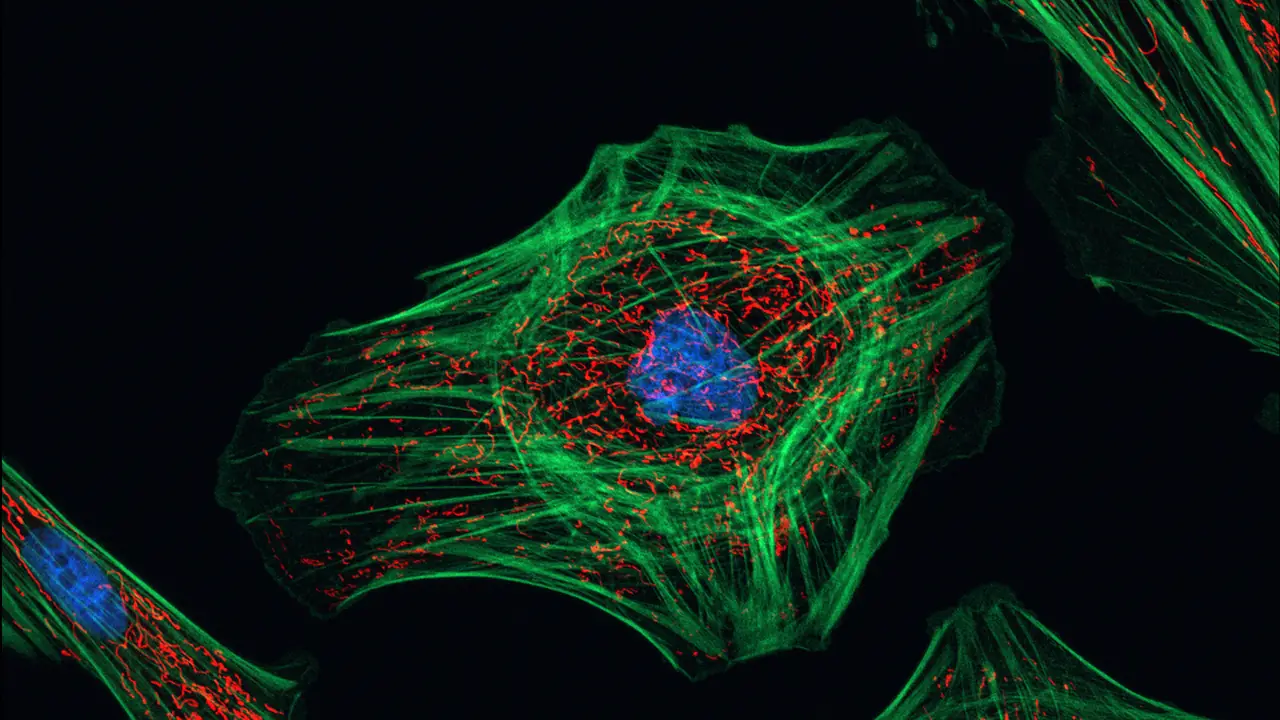
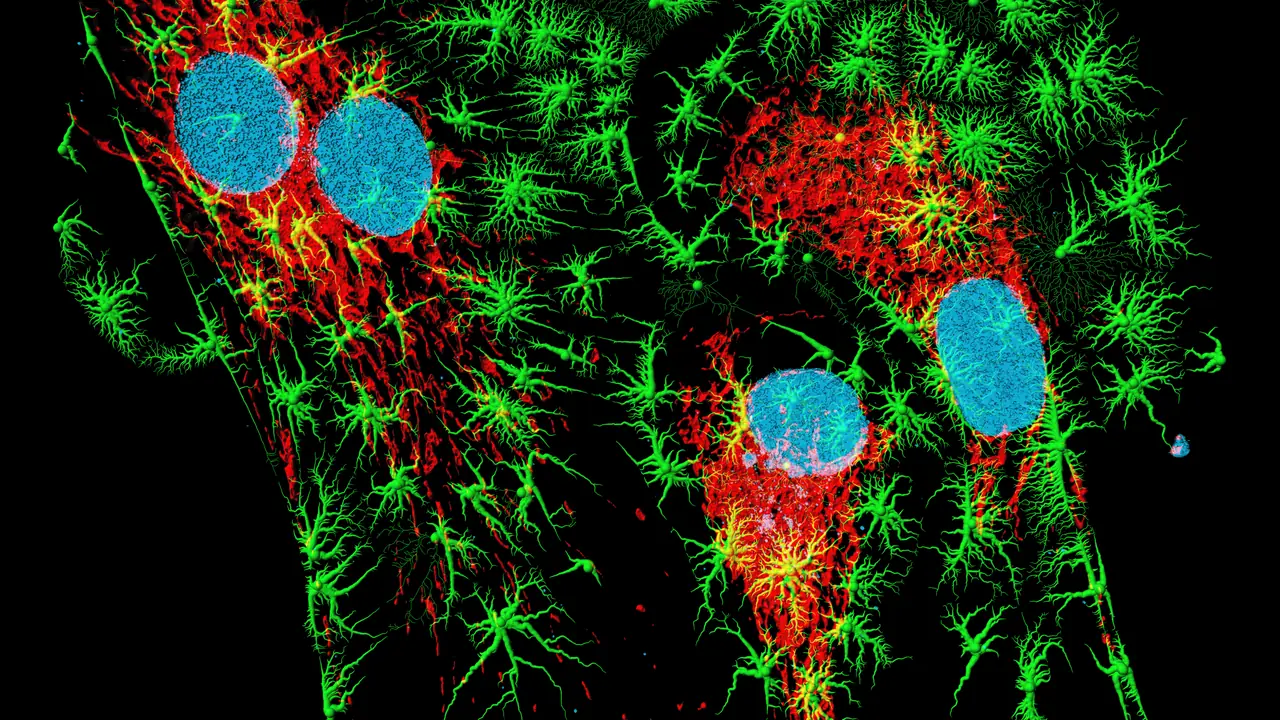
Fluorescent phalloidin, which binds only F-actin, is the standard way to visualise filaments; pairing it with a G-actin probe shows how a treatment shifts the balance.
Practical notes
- Tβ4 and its fragments are highly charged and dissolve readily in water.
- Migration assays are sensitive to serum and to cell density; standardise both.
- Include a positive control (for example a growth factor known to stimulate migration in your cells).
Thymosin β4 is frequently studied alongside BPC-157, a peptide proposed to act through growth-factor-receptor and FAK signalling. See BPC-157 in the pre-clinical literature and research stacks explained.
For in-vitro laboratory research only. Not for human or veterinary use. This article summarises laboratory practice and published research. Nothing here is advice about use in people or animals.