Research Stacks Explained: Why Labs Study Peptides in Combination
What a research stack is, the scientific reasons compounds are paired, the stacks Australian labs order most, and why single-compound controls make combination data interpretable.

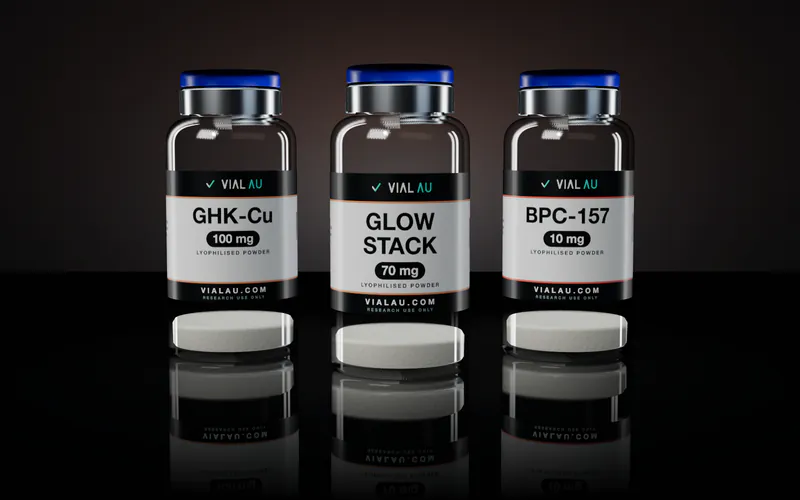
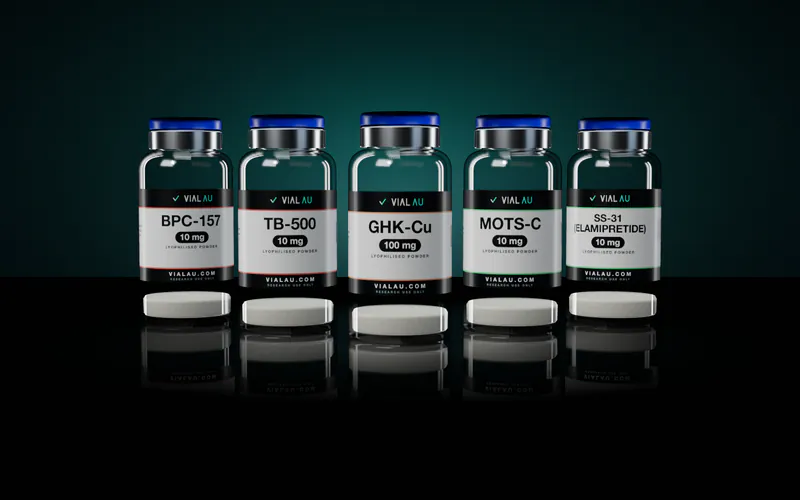
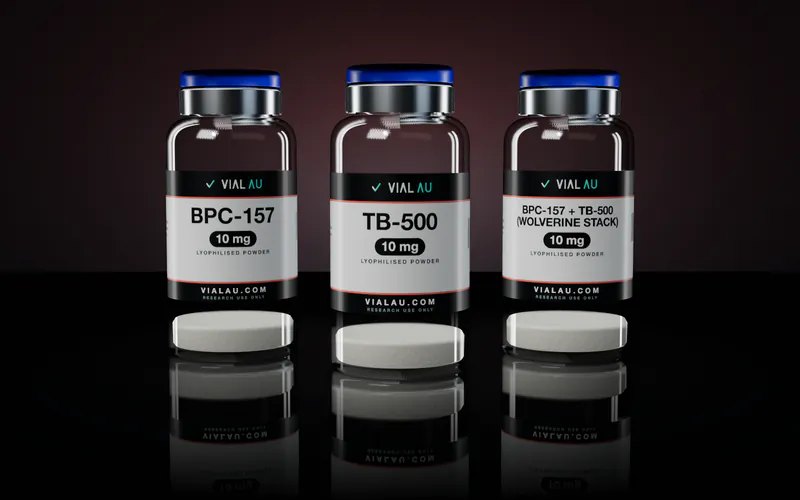
Illustrative render. Each vial ships with its own lot code; certificates are listed below.
Research goal: Broad multi-domain screening research
Twelve compounds across five research domains, for labs building a screening library.
One vial each of BPC-157, TB-500, GHK-Cu 100 mg, MOTS-c, SS-31, Ipamorelin, CJC-1295 (no DAC), Semax, Selank, KPV, Epitalon and NAD+, with two diluent vials: a single-lot reference library spanning tissue, dermal, GH-axis, neuropeptide and mitochondrial research.
Individually $1,028.99Save $153.99 (15%)
$875.00
● In stock · same-day dispatch
For in-vitro laboratory research only. Not for human or veterinary use. A research purchasing declaration is required at checkout.
Laboratory handling only. See the research blog for storage, reconstitution and COA guides.

What a research stack is, the scientific reasons compounds are paired, the stacks Australian labs order most, and why single-compound controls make combination data interpretable.
A research summary of BPC-157: what the pentadecapeptide is, the cell and animal models it has been studied in, the signalling pathways proposed, and the gaps that remain.

A laboratory guide to dissolving lyophilised peptides: matching the solvent to the sequence, calculating concentration, avoiding loss to plastic, and what each diluent means for your assay.
Save 10%Tissue-repair & cell-migration research
The BPC-157 + TB-500 pairing Australian labs order most, with a pre-blended reference vial.
Save 10%Copper-peptide & extracellular-matrix research
GHK-Cu with the GLOW blend for collagen, elastin and fibroblast-signalling models.
Save 10%Multi-pathway matrix & inflammatory-signalling research
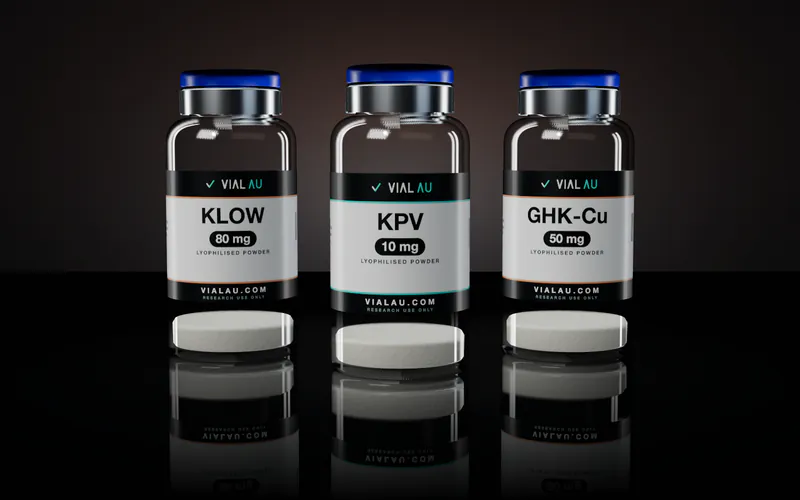
The four-peptide KLOW blend, with single-compound KPV and GHK-Cu controls.