CJC-1295 and Ipamorelin: Tools for Growth-Hormone-Axis Research
How GHRH analogues and ghrelin-receptor agonists act at different points of the somatotropic axis, what DAC changes, and how pituitary-cell models use the pair.
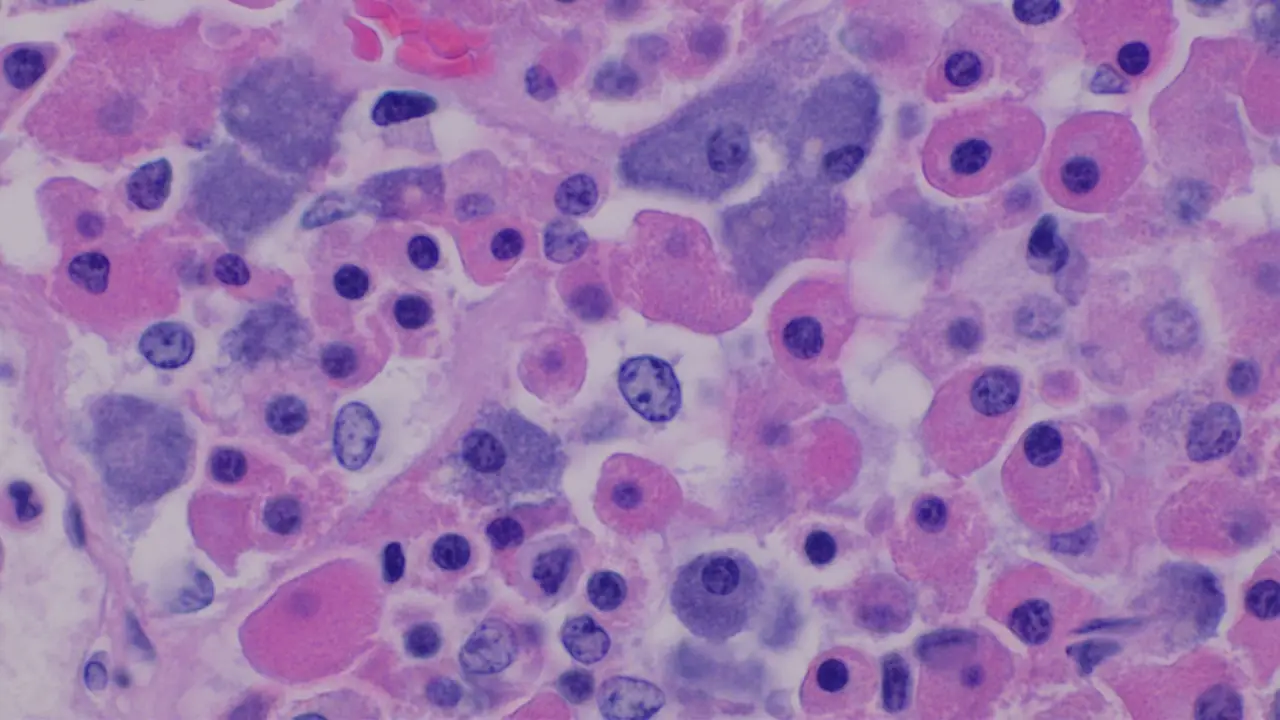
Growth hormone (GH) release from the anterior pituitary is controlled by two stimulatory signals and one inhibitory one. Research peptides that mimic the stimulatory signals let laboratories probe each input separately, which is why CJC-1295 and ipamorelin are so often studied together.
The axis in brief
- GHRH (growth-hormone-releasing hormone) from the hypothalamus acts on the GHRH receptor on pituitary somatotrophs, raising cAMP.
- Ghrelin acts on the growth hormone secretagogue receptor (GHS-R1a), signalling mainly through Gq and calcium.
- Somatostatin inhibits release.
- GH drives production of IGF-1, which feeds back on the axis.
Because GHRH-R and GHS-R1a use different signalling routes, activating both together has been reported to produce a greater-than-additive response in pituitary models, the classic rationale for pairing them.
CJC-1295 (with and without DAC)
CJC-1295 is a 29-residue analogue of GHRH(1–29) with four substitutions (D-Ala², Gln⁸, Ala¹⁵, Leu²⁷) that improve resistance to enzymatic cleavage, notably by DPP-4.
| Form | Key feature | Research implication |
|---|---|---|
| Without DAC (modified GRF 1–29) | Short half-life in published models | Pulsatile, time-resolved stimulation |
| With DAC (drug affinity complex) | Lysine-linked maleimide group that binds albumin | Extended exposure in models containing albumin |
In serum-free in-vitro systems with no albumin, the DAC’s half-life extension does not apply in the same way, which is worth considering when choosing between them.
Ipamorelin
Ipamorelin is a pentapeptide GHS-R1a agonist first described in the late 1990s. It is valued as a research tool because it is selective in the published models: it stimulates GH release with little effect on ACTH or cortisol, unlike some earlier secretagogues.
Tesamorelin and IGF-1 LR3
- Tesamorelin is a stabilised full-length GHRH(1–44) analogue with a trans-3-hexenoyl group at the N-terminus.
- IGF-1 LR3 is a long-acting IGF-1 analogue with reduced binding to IGF-binding proteins, used to study the downstream IGF-1 receptor directly.
In-vitro models
- Primary rat or mouse pituitary cell cultures, measuring GH in the medium by ELISA
- Cell lines expressing recombinant GHRH-R or GHS-R1a, with cAMP or calcium readouts
- Receptor-binding and selectivity assays
Short peptides like ipamorelin adsorb to plastics at low concentrations; use low-binding tubes (choosing a reconstitution solvent).
For in-vitro laboratory research only. Not for human or veterinary use. This article summarises laboratory practice and published research. Nothing here is advice about use in people or animals.