Retatrutide Research: An In-Vitro Primer on Triple-Receptor Agonism
How a single peptide can activate GIP, GLP-1 and glucagon receptors, how receptor selectivity is measured in cAMP assays, and what to control for in multi-receptor experiments.
Retatrutide (development code LY3437943) is an investigational peptide designed to act as an agonist at three related receptors: the GIP receptor (GIPR), the GLP-1 receptor (GLP-1R) and the glucagon receptor (GCGR). For laboratory researchers, it is an interesting tool for studying how one ligand engages several class B G-protein-coupled receptors.
The receptors
All three are class B GPCRs that couple mainly to Gs, raising intracellular cAMP when activated. They share structural features, which is what makes a single “multi-agonist” peptide possible, but differ in where they are expressed and in the pathways they control.
| Receptor | Native ligand | Typical in-vitro readout |
|---|---|---|
| GLP-1R | GLP-1 | cAMP accumulation, β-arrestin recruitment |
| GIPR | GIP | cAMP accumulation |
| GCGR | Glucagon | cAMP accumulation, hepatocyte glucose output |
How the molecule is built
Retatrutide is a peptide of roughly 39 residues with non-natural amino acids and a fatty diacid side chain attached through a linker. The lipid moiety promotes binding to albumin, a strategy used to extend exposure in published models. As with DAC-modified peptides, the presence or absence of albumin in your assay medium changes the free concentration.
Measuring selectivity
The standard approach is a cAMP assay in cells engineered to express one receptor each:
- Plate cells expressing GLP-1R, GIPR or GCGR in separate wells or plates.
- Add the peptide across a concentration range (typically half-log steps).
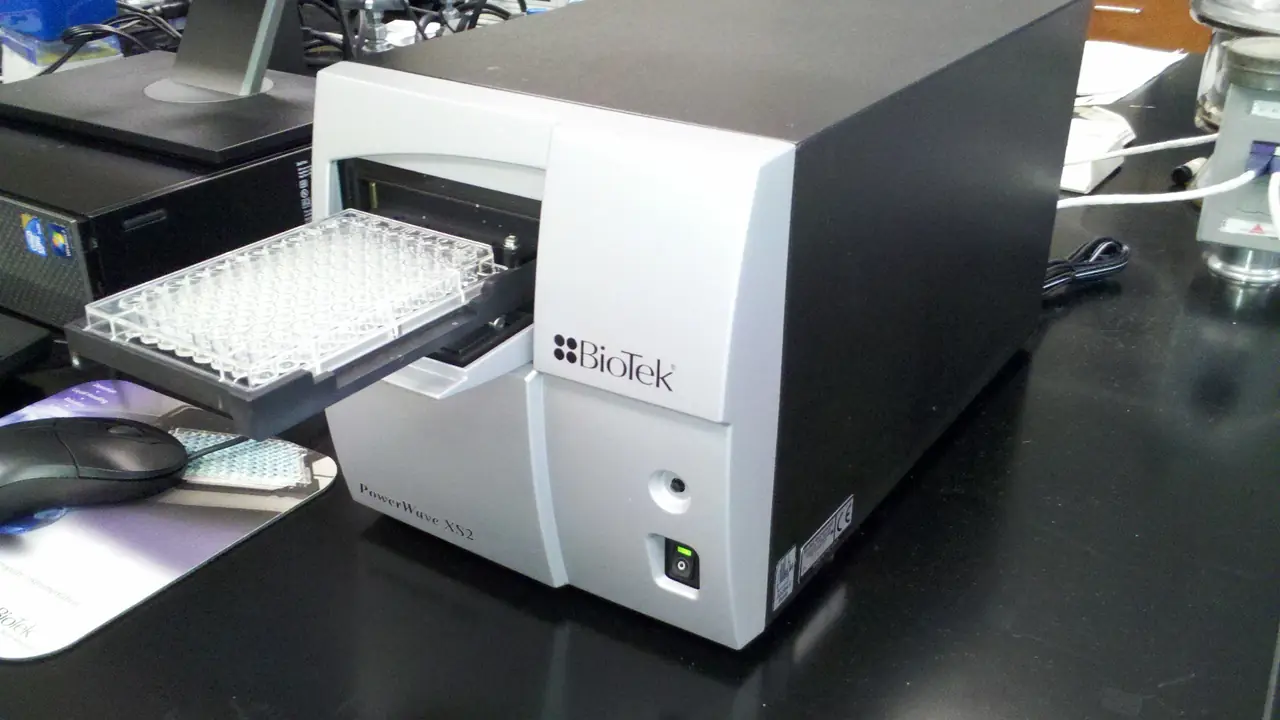
- Measure cAMP (HTRF, luminescence or ELISA) on a plate reader.
- Fit concentration-response curves and compare EC₅₀ and maximal response against each native ligand.
Relative potency at each receptor, not absolute potency, is the key output.
Things that skew results
- Albumin and serum. Lipidated peptides bind albumin; results in serum-free buffer and in 0.1% BSA can differ substantially.
- Receptor expression level. High-expressing lines can make partial agonists look like full agonists.
- Adsorption. Lipidated peptides stick to plastic; use low-binding plates and tubes, and a carrier protein where appropriate.
- Net content. Correct for counter-ions and water; see net peptide content vs purity.
Related tools
Cagrilintide (a long-acting amylin analogue) and 5-Amino-1MQ (an NNMT inhibitor) are often studied as comparators acting on non-incretin pathways. Designing multi-compound experiments covers how to structure such comparisons.
For in-vitro laboratory research only. Not for human or veterinary use. This article summarises laboratory practice and published research. Nothing here is advice about use in people or animals.