Semax and Selank: Heptapeptide Analogues in Neuropeptide Research
Two short synthetic peptides built from ACTH and tuftsin fragments with a stabilising Pro-Gly-Pro tail: their design, the neuronal models they are studied in, and handling tips.
Semax and Selank are two heptapeptides developed in Russia that share a clever piece of design: each takes a short, biologically active fragment of a natural peptide and adds a Pro-Gly-Pro (PGP) tail that makes the molecule more resistant to breakdown by peptidases.
Design
| Peptide | Sequence | Parent fragment |
|---|---|---|
| Semax | Met-Glu-His-Phe-Pro-Gly-Pro | ACTH(4–7) + PGP |
| Selank | Thr-Lys-Pro-Arg-Pro-Gly-Pro | Tuftsin (Thr-Lys-Pro-Arg) + PGP |
| DSIP | Trp-Ala-Gly-Gly-Asp-Ala-Ser-Gly-Glu | Native nonapeptide |
The ACTH(4–7) fragment in Semax has no meaningful hormonal (corticotropic) activity, which is why it is used as a neuropeptide tool rather than an ACTH analogue. Tuftsin is an immunomodulatory tetrapeptide derived from immunoglobulin G.
What has been studied
Semax
- Expression of BDNF and its receptor TrkB in neuronal and glial cultures
- Gene-expression profiling in models of neuronal stress
- Neurotrophin signalling more broadly
Selank
- Interactions with GABAergic signalling
- Effects on enkephalin-degrading enzymes
- Expression of genes involved in neurotransmission and inflammation
DSIP (delta sleep-inducing peptide) is a nonapeptide first isolated in the 1970s and used in neuroendocrine signalling studies; a specific receptor remains uncharacterised.
In-vitro models
- Primary cortical or hippocampal neuron cultures
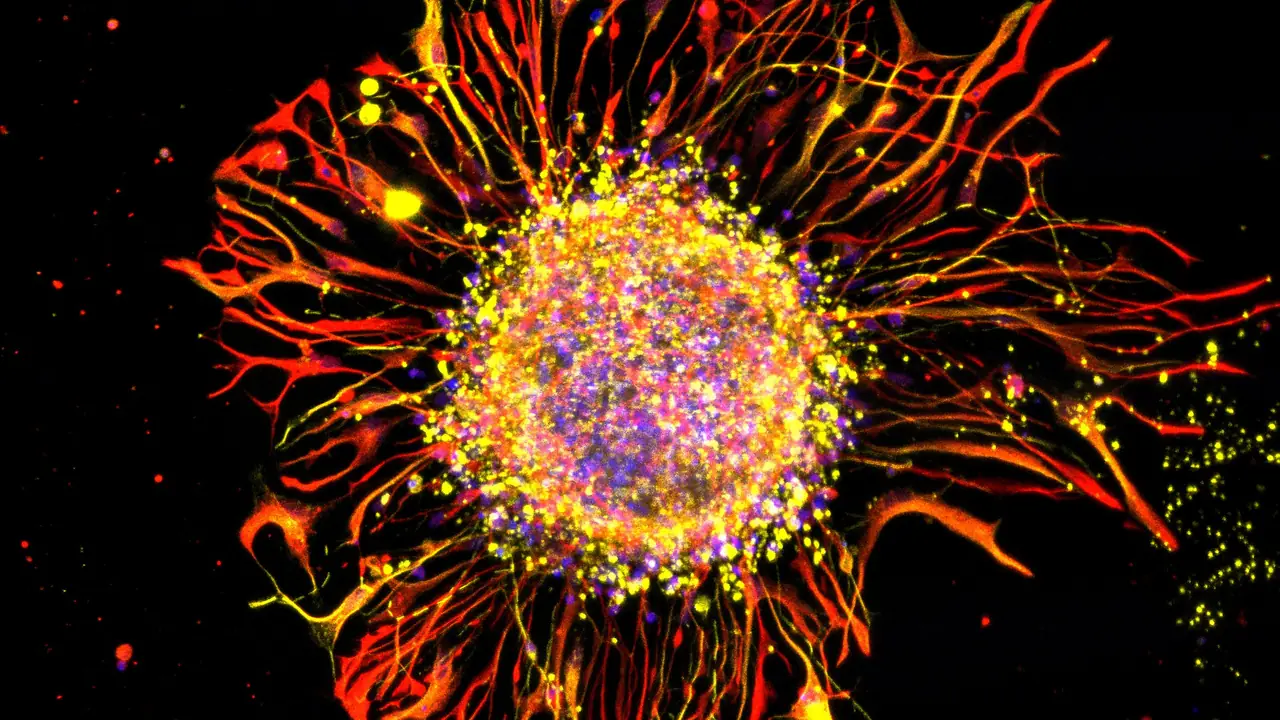
- Neurospheres and neural progenitor cultures (outgrowth, differentiation)
- Neuronal cell lines such as SH-SY5Y, often after differentiation
- Glial cultures for neurotrophin and cytokine readouts
Handling
- Both are short and water-soluble, but short peptides adsorb to glass and plastic at low concentrations. Use low-binding tubes and consider a carrier protein for very dilute solutions.
- Semax contains methionine, so it can oxidise (+16 Da) in solution: keep stocks cold, dark and aliquoted (see peptide degradation in solution).
- Neuronal cultures are sensitive to solvent; prepare stocks in the culture medium or a matched vehicle.
For choosing between primary neurons, lines and organoids, see choosing in-vitro models for peptide research.
For in-vitro laboratory research only. Not for human or veterinary use. This article summarises laboratory practice and published research. Nothing here is advice about use in people or animals.